

The attention crisis and the rise of influencer marketing
Why trust is becoming brands' new competitive advantage



This newsletter is sponsored by SARAL, the platform that helps brands build and manage influencer marketing programs.
In this newsletter, we explore one of the most significant shifts in modern marketing: how the democratization of distribution has turned attention into the scarcest resource and trust into brands’ new competitive advantage.
Drawing on Source Credibility Theory, we examine why certain individuals are able to shape purchasing decisions and how the evolution of social networks into people-powered search engines is transforming the way consumers discover brands.
Finally, we look at how these principles come to life through the cases of Hawaiian Tropic and Spacegoods, as well as SARAL’s Predictable Influence Pyramid framework, showing how influencer marketing can evolve from a series of isolated campaigns into a scalable system that generates trust, content, data, and sustainable growth over time.
When distribution stops being a competitive advantage
Over the past fifteen years, marketing has solved one of the challenges that defined much of its history: distribution.
With platforms such as Meta, Google, and TikTok, it has become increasingly easy to reach specific audiences, optimize campaigns in real time, and measure every purchasing behavior. Thanks to these platforms, any company can now distribute messages at scale.
But when everyone has the ability to distribute content, distribution is no longer a competitive advantage. The real scarcity becomes attention.
As a result, competition has changed as well: whereas brands once competed only with other brands, today they compete with millions of videos, newsletters, podcasts, online communities, and user-generated content.
It is precisely in this context that influencer marketing has grown. Rather than focusing on distributing messages, it helps brands earn attention and trust.
Why some people influence more than brands
At this point, a question naturally arises: why do millions of people place greater trust in an influencer’s recommendation than in the message of a company they have known for years?
The answer comes more from psychology than from marketing.
Source Credibility Theory, proposed by Hovland et al. (1953)1, argues that a source’s ability to influence attitudes and behaviors depends on the credibility attributed to it. People are, in fact, more easily persuaded by sources they perceive as credible.
According to this theory, four elements contribute to building that credibility: credibility, understood as the overall credibility attributed to the source; expertise, meaning the competence, experience, and knowledge that the audience attributes to the source; trustworthiness, or the perception that the source is honest, fair, and reliable; and authenticity, namely the ability to appear genuine, sincere, and consistent in the way one presents and communicates oneself.
It is precisely this combination that explains why people with only a few tens of thousands of followers are often able to influence purchasing decisions more than celebrities followed by millions.
The difference is not fame, but credibility.
From social networks to search engines
The growth of influencer marketing does not depend solely on influencers’ ability to reach an audience, but on the role they play within a brand’s strategy.
For many years, social networks were primarily places for entertainment and social interaction. Today, they are becoming something different.
More and more people open TikTok, YouTube, or Instagram not to see what their friends are doing, but to find out which camera to buy, which restaurant to choose, which supplement to try, or which software to use.
These platforms are evolving from social networks into people-based search engines.
This transformation is also fundamentally changing the role of creators. They are no longer simply content producers but are becoming intermediaries of trust.
By reducing uncertainty, they help people make decisions long before the moment of purchase.
From trust to systems: two different ways influencers create value
The growth of influencer marketing does not depend solely on the number of people an influencer reaches, but on how influencers are integrated into brand strategies.
The most interesting cases show that influencers can create value in different ways. In some cases, they strengthen a brand’s identity; in others, they become part of a system capable of generating content, data, relationships, and new growth opportunities.
The strategies adopted by Hawaiian Tropic and Spacegoods clearly illustrate these two different approaches.
The Hawaiian Tropic case
In 2025, Hawaiian Tropic launched Tan Sutra, described by the company as the largest creative campaign in its history, with Alix Earle - one of the most influential figures in the lifestyle and beauty space - as its leading face. In 2026, the brand renewed the partnership with a second campaign, reinforcing its intention to build an ongoing relationship.
The most interesting aspect is not the influencer’s popularity, but the role she is given.
The entire campaign was built around her personality, her tone of voice, and the relationship of trust she has developed with her community.

The collaboration extended well beyond social media content, including influencer seeding, partnerships with other influencers, live events, and experiential initiatives.
In this case, the influencer is not used solely to amplify an advertising message, but actively contributes to shaping the brand’s meaning.
The Spacegoods case
While Hawaiian Tropic demonstrates how an influencer can strengthen a brand’s identity, Spacegoods represents a further evolution, showing how a network of creators can be transformed into a growth engine.
The brand initially began collaborating with creators by sending them its products in the hope of generating organic posts. This approach generated visibility, but each collaboration ended with a single piece of content.
With a team of just two people, Spacegoods overcame this limitation by building a community of more than 1,000 creators, replacing simple product seeding with an ongoing affiliate program.
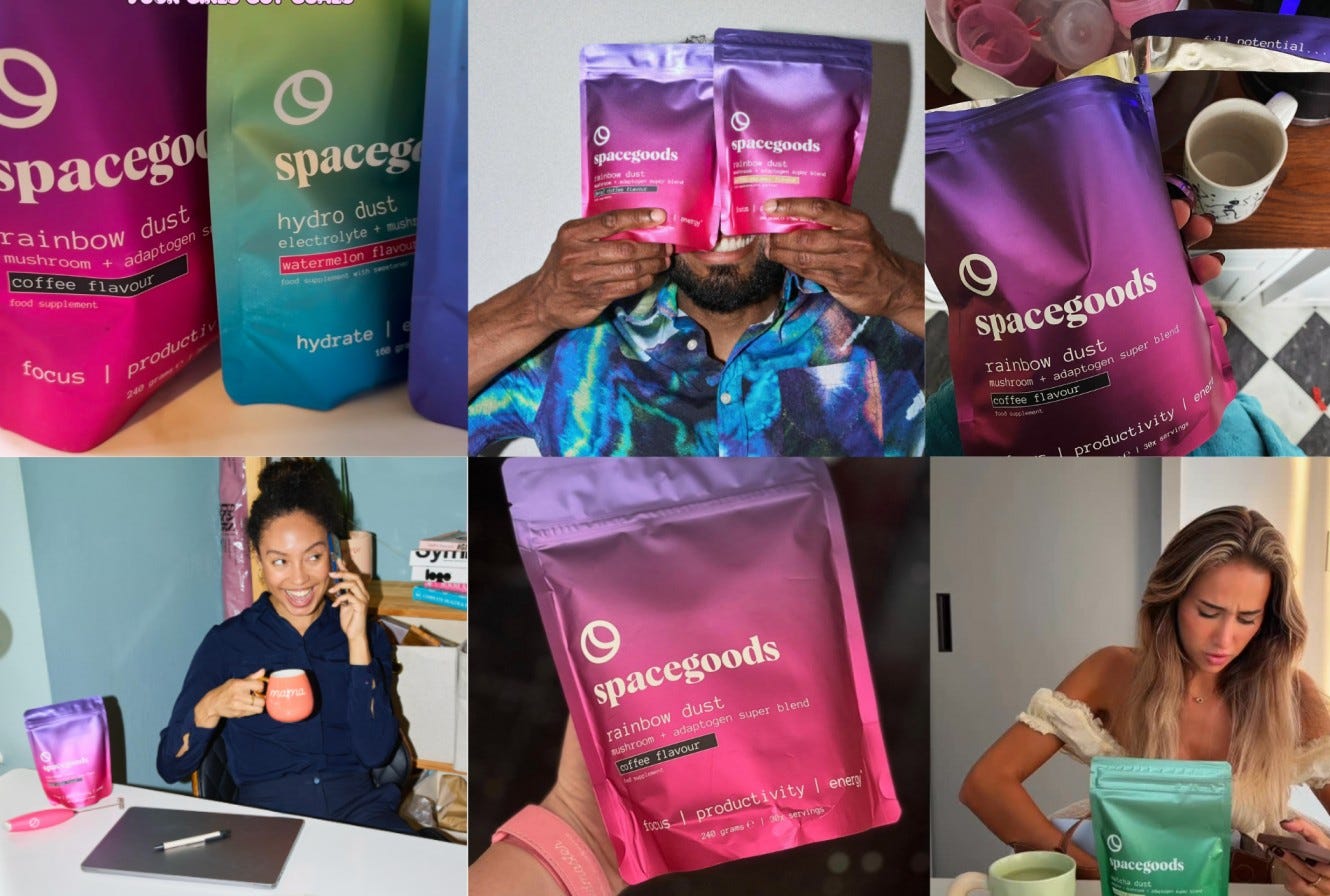
The goal is to create an ecosystem in which every creator simultaneously generates content, social proof, and new growth opportunities.
The best-performing content is repurposed in paid campaigns, the sales generated by affiliates fund new collaborations, and every relationship helps make the program more effective.
As a result, the creator is no longer simply an acquisition channel, but becomes part of a system that continues to accumulate value over time.
From trust to systems
The cases analyzed above highlight two different ways of using influencer marketing to create value: Hawaiian Tropic builds a credible and relevant brand identity by leveraging the relationship between an influencer and her community, while Spacegoods uses the trust generated by creators to build a system that continuously generates content, data, and new growth opportunities.
The difference between the two cases lies in the way the relationship is managed.
In the first case, the influencer is the protagonist of a successful campaign; in the second, creators are part of a process that continues to generate value well beyond a single collaboration.
It is precisely in this difference that the limitation of the approach still followed by many companies today becomes evident.
The mistake many brands still make
Despite the growing importance of influencer marketing, many companies still manage it as a simple sequence of independent collaborations.
After identifying an influencer and negotiating a partnership, the content is published, the ROI is measured, and then the process starts over with the next influencer.
This approach reflects the logic of advertising, but not the logic of trust, which is built through continuity, repetition, and consistency - not through a single piece of content.
To create lasting value, every collaboration should generate new insights, reusable content, and relationships that can be developed over time.
When this does not happen, influencer marketing never becomes a system; it remains nothing more than a sequence of campaigns.
The Predictable Influence Pyramid
What truly matters, then, is building a system capable of turning occasional collaborations into a lasting competitive advantage.
Our partner SARAL, a platform specialized in managing influencer marketing programs, has summarized this process in what it calls the Predictable Influence Pyramid.
At the core of the model is the idea that the most mature influencer marketing programs do not try to find the perfect influencer from the outset. Instead, they build relationships progressively, reducing risk while increasing the quality of the information collected at every stage.
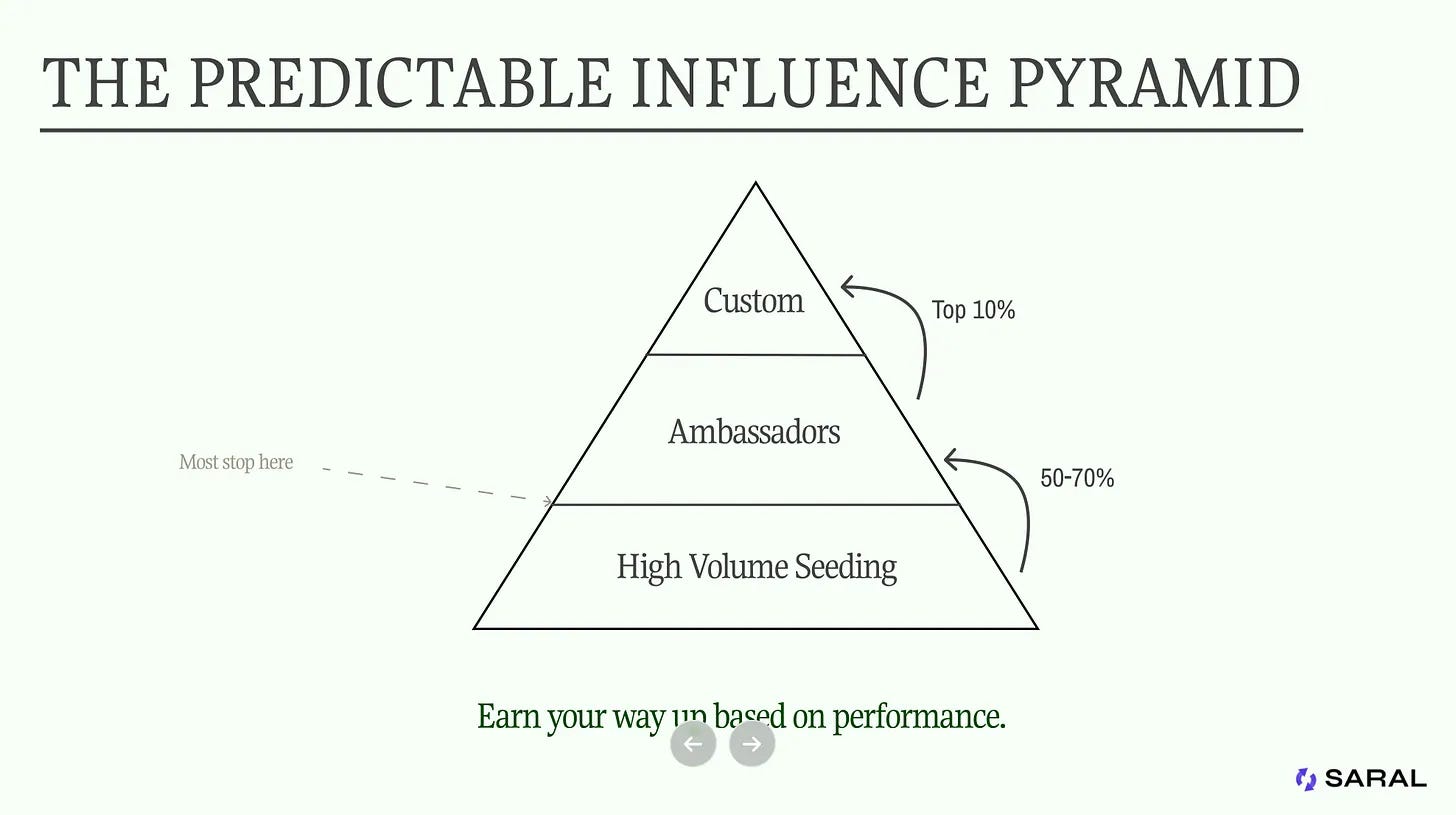
The pyramid is built on a foundation known as seeding, through which the brand sends its products to a large number of creators. The goal is to identify who genuinely uses the product, understands its value, and shares it authentically.
From this initial group emerge the ambassadors: creators with whom the brand can build long-term relationships, affiliate programs, and a consistent flow of content.
At the top of the pyramid are strategic partnerships, established on the basis of proven results rather than metrics such as follower count or engagement.
The framework helps brands not only identify the most suitable creators, but also transform every collaboration into a growing asset of knowledge, content, and relationships.
From programs to Creator Infrastructure
The Predictable Influence Pyramid does not simply describe an operational process. It describes the shift from a campaign-based approach to a systems-based approach.
Every creator produces content that fuels paid campaigns. Those campaigns, in turn, generate data that makes it possible to identify the creators who generate the greatest value for the brand.
This is the kind of system we can define as a Creator Infrastructure: not a collection of creators, but an infrastructure of relationships, content, and data capable of accumulating value over time.
Building a Creator Infrastructure, however, is far more complex than launching a few collaborations with creators. It requires identifying the right profiles, managing hundreds of relationships over time, analyzing performance, organizing the content produced, and turning every collaboration into valuable data for the next one.
This is precisely the approach that SARAL was built to support. The platform enables brands to identify creators who are genuinely aligned with their positioning, analyze their audiences and performance, and manage their entire influencer marketing program from a single platform, putting the principles of the Predictable Influence Pyramid into practice.
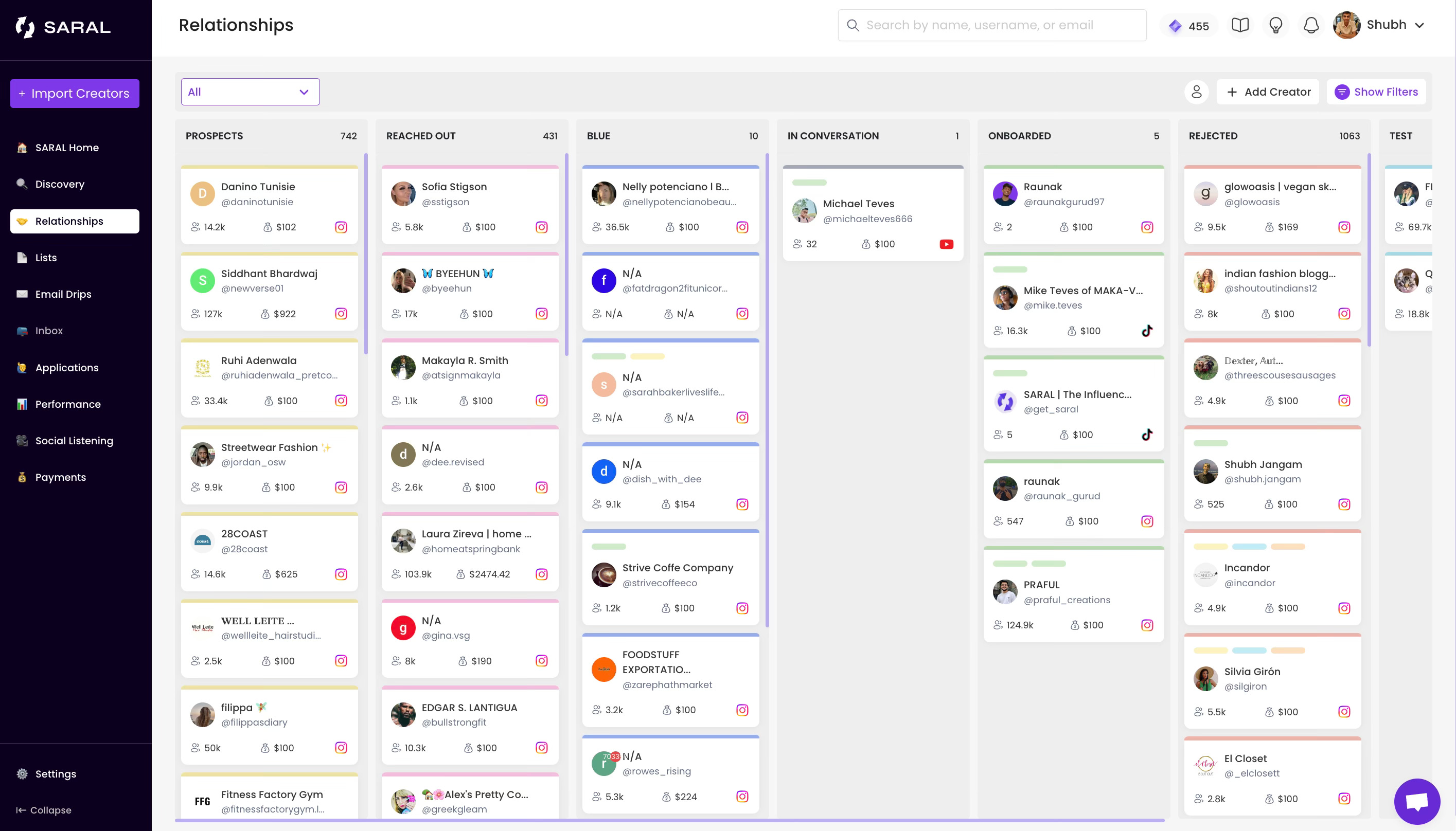
If you are building your influencer marketing program, you can book a demo with the SARAL team. By mentioning that you discovered the platform through this newsletter, you will receive $500 off, white-glove onboarding, and monthly strategic sessions.
The wave doesn’t stop here.
We’ll be back with more stories shaping the future of brands, tech and culture. Catch the next wave with us.
Hovland, Carl I., and Walter Weiss. “The Influence of Source Credibility on Communication Effectiveness.” The Public Opinion Quarterly, vol. 15, no. 4, 1951, pp. 635–50. JSTOR, http://www.jstor.org/stable/2745952. Accessed 4 Aug. 2026.