

The marketing trap of measuring everything
Why the obsession with performance is destroying brand value - and what we can learn from Nike and Patagonia



This newsletter is sponsored by Tracksuit, the always-on brand tracker built for marketers and agencies to answer the question “Is my strategy working?”
In this newsletter, we analyze one of the most interesting contradictions in modern marketing: how the growing ability to measure everything has ended up pushing many companies to focus only on what generates immediate results, neglecting what builds long-term growth.
Starting from research that has been challenging this trend for years, we explore the concept of Future Demand and the role brands play in creating it, looking at how these principles manifest in reality through the cases of Patagonia and Nike.
Finally, we focus on the central problem today, which is not so much proving that brand building works, but translating its value into a language that CFOs, finance teams, and boardrooms are willing to fund.
The era of total measurability and the silent growth of the short term
Over the past fifteen years, marketing has undergone a radical transformation. The arrival of digital platforms such as Meta Ads, Google Ads, and TikTok Ads has made it possible to launch a campaign and observe every single behavior in real time: clicks, conversions, leads, sales, return on investment. It is a change that has made marketing more precise, more technical, and seemingly more rational, because every investment can be linked to an outcome.
However, this evolution has produced a less visible but much deeper side effect. Many companies have started optimizing for what delivers short-term results, neglecting everything that does not show up right away but builds value over time.
When marketing started optimizing the present while forgetting the future
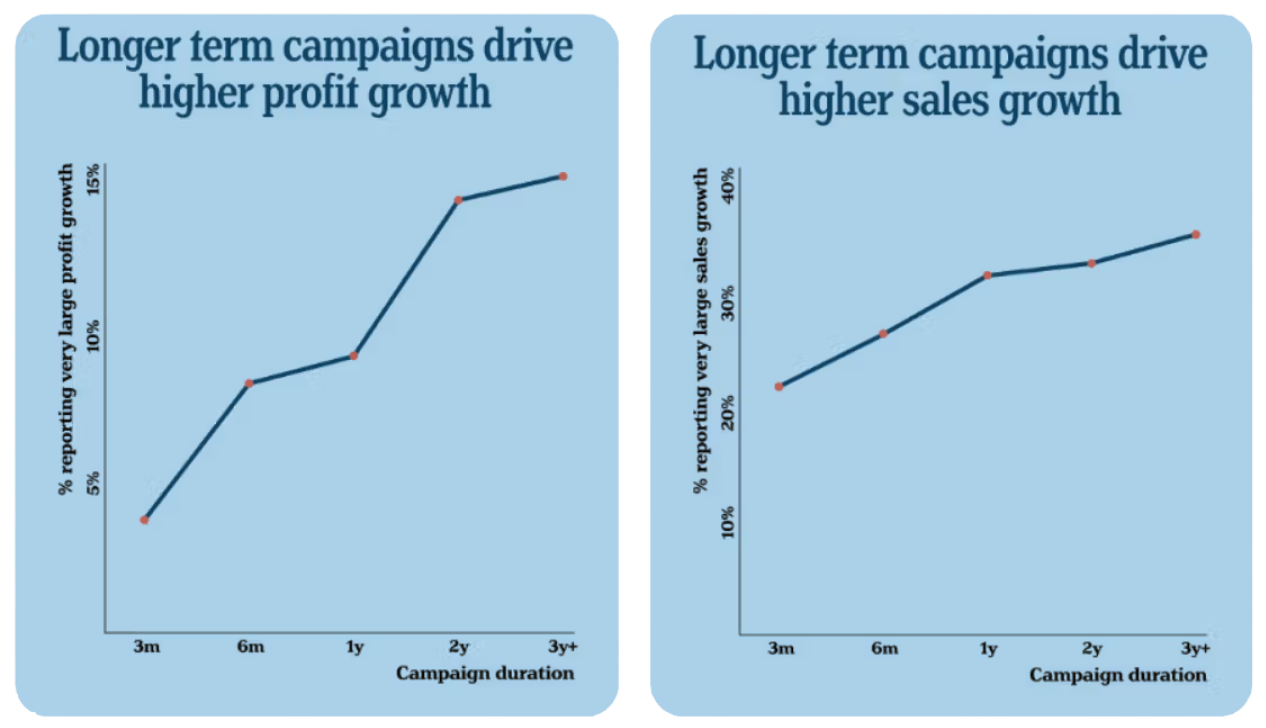
As early as 2013, the study The Long and The Short of It1 by Les Binet and Peter Field warned against this drift. The risk, according to the authors, was that marketing was increasingly investing resources in convincing people already close to purchase to choose a specific brand, while neglecting all those activities that make a brand known, relevant, and desirable in the long term. In other words, companies were becoming increasingly good at converting existing demand, but less and less attentive to creating the conditions for new people to choose that brand in the future.
The invisible part of the market that drives growth
To understand why this is a structural problem, we need to shift our perspective on how demand is created. The concept of Future Demand2, introduced by James Hurman, clarifies that every market is made up of two distinct groups of people: on one side there is existing demand, consisting of consumers who are already in the market - meaning they have an active need and are considering a purchase in the short term; on the other side there is future demand, formed by a much larger population of people who are not currently thinking about that product at all, but who will eventually enter the category and need to make a decision.
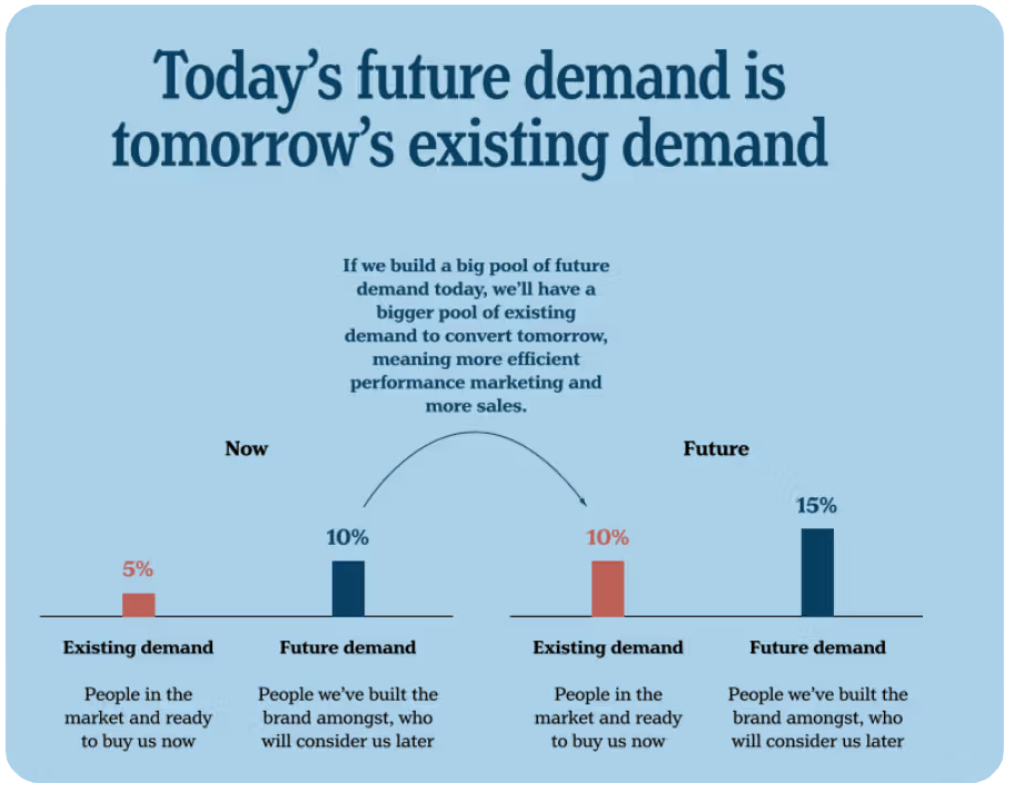
The crucial point is that the second category is almost always much larger than the first. However, most advertising investment is concentrated on the first, because it is easier to reach and, above all, easier to measure. If someone clicks an ad and makes a purchase, the result is obvious. If someone develops a preference for a brand after months or years of exposure to messages, content, and cultural associations, that journey becomes invisible to attribution systems.
How and when purchase decisions are truly formed
Yet the problem is not only technical, but also cognitive. Most purchase decisions are not formed at the moment a person enters a marketing funnel. They are formed much earlier, through a gradual accumulation of experiences, memories, emotions, and associations linked to brands. By the time the moment of purchase arrives, people rarely choose from scratch: they choose within a mental framework that has already been shaped.
This is where marketing splits into two fundamental functions3. Performance marketing works on existing demand, trying to convert people who are already ready to buy through measurable levers such as clicks, leads, and sales. Brand marketing, on the other hand, works on future demand, gradually building awareness, trust, familiarity, and above all preference. The first captures demand, the second creates it.
Brand, demand, and the cost of losing the long term
This distinction may seem theoretical. In reality, it is visible in the brands we encounter every day. Some of the world’s most iconic companies became so precisely because they invested for years in building future demand. And when this balance breaks, the effects begin to show even in business metrics.
Few cases illustrate this better than Patagonia and Nike.
Patagonia: when not selling becomes the strongest marketing strategy
To make this distinction concrete, the case of Patagonia is extremely clarifying. Patagonia does not simply sell outdoor clothing: over time it has built a system of meanings tied to sustainability, conscious consumption, and environmental responsibility. The product becomes almost secondary to the worldview the brand represents.
A defining example is the Don’t Buy This Jacket campaign, launched during Black Friday in 2011. At a time of year when every brand pushes for maximum commercial performance, Patagonia chose to explicitly ask people not to buy unless necessary. From a performance marketing perspective, this is counterintuitive, as it sacrifices immediate sales. From a brand marketing perspective, however, it is an extremely powerful gesture: it reinforces the consistency of the positioning and turns the brand into a symbol of integrity.

The same principle can be seen in the Worn Wear program, which encourages repairing and reusing garments instead of continuous purchasing. Here again, the company appears to be sacrificing short-term gains, but in reality it is investing in something more durable: trust. Every action strengthens the brand’s narrative consistency and increases the likelihood that, in the future, Patagonia will be the natural choice when a need arises in the outdoor category.
Nike: the brand that built desire before the product
If Patagonia represents an almost pure example of future demand building, Nike shows in an even more interesting way the tension between brand and performance marketing.
For decades, Nike has been one of the strongest examples in the world of brand building. It has never simply sold shoes, but a much broader idea: ambition, discipline, overcoming limits, and personal identity.
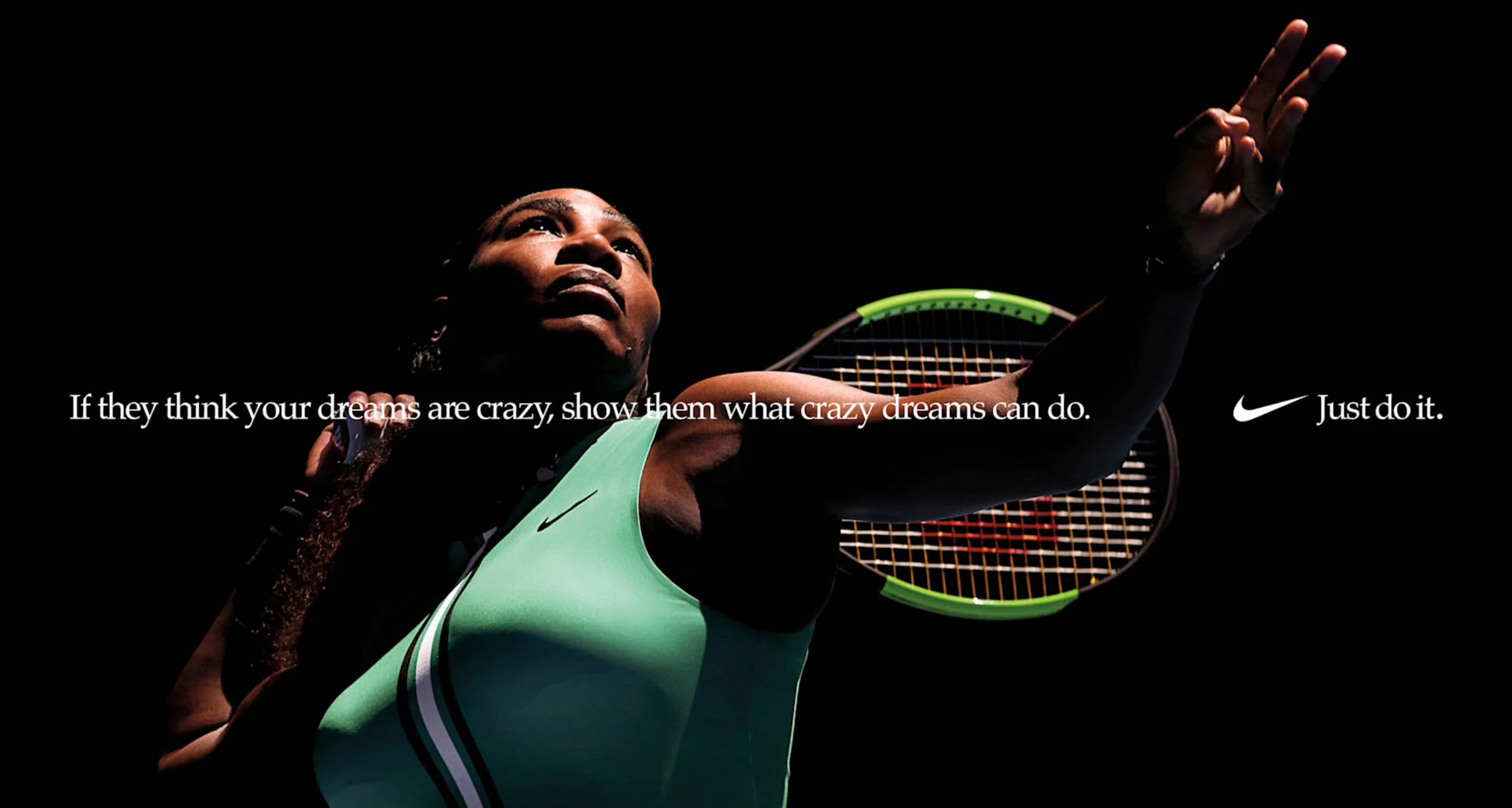
The slogan Just Do It is not a description of a product, but a philosophy of behavior. Campaigns featuring athletes such as Michael Jordan, Serena Williams, Cristiano Ronaldo, or LeBron James have never focused on the technical features of shoes, but on building extremely strong mental associations between Nike and the concept of excellence.
In recent years, however, Nike has also become an interesting case of a potential imbalance between the two dimensions of marketing. Starting in 2020, under the leadership of John Donahoe, the company progressively increased its focus on performance marketing, influencer marketing, digital channels, and direct-to-consumer sales. The goal was to increase efficiency, control, and measurability.
In the short term, this approach appeared consistent with market trends, but in 2024 significant signals emerged: a decline in digital sales, reduced profits, loss of market share, and, most importantly, a decrease in brand consideration and brand preference. Although these results cannot be attributed exclusively to marketing, it is notable that the indicators linked to future demand weakened.
In other words, it was not only the ability to sell today that weakened, but also the ability to be chosen tomorrow. And this is precisely the critical point: when the brand stops being nurtured, performance can continue for a while, but it gradually loses the foundation it relies on.
Recent campaigns such as Winning Isn’t For Everyone and So Win therefore seem to signal a return to brand meaning-building. They do not speak directly about products or promotions, but about identity, sacrifice, competitiveness, and a winning mindset.

Nike thus appears to be returning to investing in what has made the brand so powerful for decades: the ability to occupy mental space before a need even exists.
The real problem is not marketing, but translation
If there is one lesson that emerges from all this research, from the cases of Patagonia and Nike, and from over a decade of studies on marketing effectiveness, it is that the debate between brand and performance has long been settled.
The question is no longer whether brand building works. Dozens of independent studies have shown for years that brands grow when they are able to balance capturing existing demand with creating future demand. The Long and the Short of It already proposed a guideline allocation of 60% of investment toward brand-building activities and 40% toward activation4. More recent studies, such as Effectiveness in Context, reach very similar conclusions, suggesting a ratio close to 62:38.
And yet, in many companies, this discussion keeps resurfacing.
Not because marketers do not believe in brand building, but because their arguments are often brought into boardrooms using a language that decision-makers in finance do not speak.
Marketers talk about awareness, salience, share of voice, and mental availability. CFOs talk about capital allocation, compounding returns, pricing power, and sustainable competitive advantage. They are observing the same phenomenon, but through different vocabularies.
This is where brand risks getting lost in translation.
In recent years, our partner Tracksuit has helped make brand more measurable, enabling companies to track metrics such as awareness, consideration, preference, and emotional connection. In other words, it has helped marketers demonstrate that brand building is not an abstract creative exercise, but an investment that produces tangible effects over time.
But measurement is only part of the problem. The other part is the ability to translate those data points, evidence, and insights into an argument that the boardroom is willing to fund.

It is precisely from this need that the first course of Tracksuit University was created, developed by James Hurman. Its objective is not to convince marketers that brand works. The goal is to equip them with the language, evidence, and structure needed to make that case in the rooms where investment decisions are made.
The most interesting part, however, is that the course does not end with theory or certification, but with a tangible output: a one-page brand investment plan.
A concise document, built in the language of finance, that translates the role of the brand into terms understandable to CFOs, finance teams, and boards.
The good news is that there is also a basic version of this template, available as a free download on the Tracksuit website, designed to help marketers get familiar with the framework before diving deeper into it in the course.
Because in the end, the problem is not knowing that brand works, but securing the investment needed to make it work.
Stop fighting the brand budget battle on vibes alone.
Use code THEBRANDWAVES to get 20% off the Tracksuit University course!
The wave doesn’t stop here.
We’ll be back with more stories shaping the future of brands, tech and culture. Catch the next wave with us.
https://ipa.co.uk/knowledge/ipa-blog/the-next-chapter-for-the-long-and-the-short-of-it
https://www.linkedin.com/pulse/new-research-support-principle-future-demand-james-hurman/
https://www.gotracksuit.com/us/report/the-awareness-advantage
https://ipa.co.uk/knowledge/ipa-blog/the-next-chapter-for-the-long-and-the-short-of-it
Had a client call about this today. Every dollar now expected to track back to ROI. But the Patagonia point is exactly it: what looks like sacrificing short-term gains is really an investment in trust. And trust is the thing performance media can't buy.